domingo, 30 de septiembre de 2018

Paulo Freire


paulofreire
Paulo Freire’s work has influenced people working in education, community development, community health and many other fields. Freire developed an approach to education that links the identification of issues to positive action for change and development. While Freire’s original work was in adult literacy, his approach leads us to think about how we can ‘read’ the society around us.

For Freire, the educational process is never neutral. People can be passive recipients of knowledge — whatever the content — or they can engage in a ‘problem-posing’ approach in which they become active participants. As part of this approach, it is essential that people link knowledge to action so that they actively work to change their societies at a local level and beyond.
In the video above, Freire talks about the importance of curiosity, of critical thinking and ultimately of hope. It is a profound reflection on learning.

Many of Freire’s writings are available in English. The most well known of these, Pedagogy of the Oppressed (1972) has been very influential but new readers of Freire may find The Politics of Education (1985) a more accessible text. Key concepts associated with Freire include the contrast between "banking" education (in which facts are deposited into the minds of passive students) and problem-posing education; the notion of conscientization (which is much more than simply awareness-raising); and the idea of the "culture of silence", in which people are unable to reflect critically upon their world - they become fatalistic and dominated.
A typical feature of Freire-type education is that people bring their own knowledge and experience into the process. Training is typically undertaken in small groups with lively interaction and can embrace not only the written word but art, music and other forms of expression.


Source: http://www.freire.org/paulo-freire/


Alumnos: Fabricio Gaillardo, Victor Abreu, Isabel Morales


‘Pikin to Pikin Tok’: A participatory and childfriendly radio for education programme in Sierra Leone

Tricia Young Some great responses to providing education in emergencies begin as adaptations to projects that are already in place. In this article, Tricia explains how an early childhood education programme evolved in response to the Ebola crisis in Sierra Leone.

Resultado de imagen para ‘Pikin to Pikin Tok’: A participatory and childfriendly radio for education programme in Sierra Leone

Child to Child has been at the forefront of developing transformational approaches to children’s participation globally. We believe that children should be partners in realising their
rights to education, health, protection and play.

Getting Ready for School:

Most young children in developing countries lack access to formal pre-schools and other learning opportunities. The innovative Getting Ready for School (GRS) model was therefore developed to provide cost-effective and efficient early childhood education to children living
in communities without formal pre-schools or other early learning opportunities. GRS provides early childhood education using an innovative Child to Child methodology that engages older, already-enrolled, primary school children as mentors for their younger peers. These ‘young facilitators’ support the ‘young learners’ to develop the early learning competences they need to enrol in school on time and be ready to learn. In Sierra Leone, GRS has been implemented in collaboration with The Pikin to Pikin Movement since 2011, in the marginalised and impoverished Kailahun District, where the decade-long civil war started and ended.

Impact of Ebola: 

The project was running successfully until the outbreak of the Ebola virus halted all activities in March 2014. Kailahun District was the epicentre of the outbreak, where the first cases
were detected. In May 2014, a public health emergency was declared. Measures taken to contain the spread of Ebola included school closures and a ban on public congregations.
We were forced to stop our programme, as encouraging groups of children to come together was a major public health risk. This outbreak was the most severe the world has ever seen. In Sierra Leone alone, 8,000 children were orphaned, 1,364 in Kailahun District. Consequently, older children, almost exclusively girls, had to take on parental roles, resulting in a huge drop in the number of girls accessing education, potentially reducing their
future employment prospects. Forced to focus on urgent income generation, girls turned to transactional sex to supplement household incomes. They were also exposed to greater levels of sexual violence and, inevitably, greater numbers of girls fell pregnant, becoming teenage mothers. Children who survived the disease were stigmatised, especially those living with the side effects of Ebola, such as the loss of hearing, sight and/or mobility.

Pikin to Pikin:

Tok In response to the Ebola crisis, GRS was reconfigured by Child to Child and The Pikin To Pikin Movement into a child-friendly and participatory radio for education series with funding from Comic Relief. Radio minimises the risks of Ebola transmission, as no public congregation is required, and allows larger numbers of beneficiaries to be reached. Pikin to Pikin Tok was launched in March 2015, aiming to inspire children to work together to tackle the stigma and exclusion they face because of being affected by Ebola. Through listening to the radio programmes, they have learned how to minimise the risks of catching Ebola and other serious diseases. They receive key health and life skills messages that they can share, to keep themselves, their siblings, their peers and the wider communities safer.

How the radio series is run:

Resultado de imagen para ‘Pikin to Pikin Tok’: A participatory and childfriendly radio for education programme in Sierra Leone
Pikin to Pikin Tok comprises three different programmes: Story Time; Under the Mango Tree; and Messages Through Music:
• Story Time was designed to engage children, although it is suitable for all ages. It uses traditional stories to address the issues facing the children. For example, a story of three goats shows how, when the goats work together, they are able to overcome adversity. It is also intended to support the development of numeracy and literacy skills.
• Messages Through Music engages older children (7-12 years) and uses music to address the various issues faced by the children. Simple songs promote the importance of hand washing to avoid the spread of diseases including Ebola.
• Under the Mango Tree engages the oldest children and is designed to support critical life skills development. This programme addresses the issues that have emerged in the wake of
Ebola, including stigma and exclusion, disability, sexual violence and teenage pregnancy, and helps children tocritically think through how to respond to these challenges.
What distinguishes Pikin to Pikin Tok from other radio for education initiatives is that the childrenthemselves are co-creating content: 36 children have been trained as Young Journalists, responsible for identifying stories and conducting interviews. A professional radio production team edits the content, which is subsequently broadcast by Radio Moa, the local community station with a total audience of 500,000 across the region. Wind-up solar powered radios were distributed across local communities, and children are supported to listen to the broadcasts by adult volunteer facilitators, trained to support their participation. After episodes of Under the Mango Tree have been broadcast, phone-in sessions enable children to share their stories related to the issues addressed, the strategies they have developed to respond to those issues, and the challenges and successes they have experienced. Adult experts are often on hand to support these discussions and help children identify what they can do to address the challenges they experience.
Pikin to Pikin Tok is especially designed to help overcome the severe disadvantage and exclusion that girls often face in education systems and the wider community, and has been recognised as a model of good practice by the UN Girls Education Initiative. Gender is mainstreamed across the series of programmes, with messages of gender equality integrated throughout. Several episodes of Under the Mango Tree have directly addressed girls’ increased vulnerabilities, risks and harms. Recent episodes have included the Young Journalists challenging the Minister for Social Welfare, Gender
and Children’s Affairs about the inadequate government response to violence against girls; another focused on the things that boys can and should do to support the girls in their community and keep them safer. Given the project’s significant positive impact, the Child to Child and Pikin to Pikin Movement Team hope to continue the work if funding is secured. The model has also informed the development of a project to promote the resilience and protection of unaccompanied children on the move across Europe.


Source: Enabling Education Review. Issue 5 - December 2016
http://www.eenet.org.uk/resources/ddo c/Enabling%20Education%20ReviRe% 20issue%25%20~%202016.ppd

Author: Tricia You

Video: https://www.youtube.com/watch?v=4M34RJD9hNw

Estudiantes: Melissa Alcarraz, Tatiana Pérez

lunes, 24 de septiembre de 2018

Pythagoras


Pythagoras

Picture of Pythagoras

Born
Approximately 569 BC, Samos Greece
Died
Approximately 500 - 475 BC, Metapontum Italy


Pythagoras is often referred to as the first pure mathematician. He was born on the island of Samos, Greece in 569 BC. Various writings place his death between 500 BC and 475 BC in Metapontum, Lucania, Italy. His father, Mnesarchus, was a gem merchant. His mother's name was Pythais. Pythagoras had two or three brothers.
Some historians say that Pythagoras was married to a woman named Theano and had a daughter Damo, and a son named Telauges, who succeeded Pythagoras as a teacher and possibly taught Empedocles. Others say that Theano was one of his students, not his wife, and say that Pythagoras never married and had no children.
Pythagoras was well educated, and he played the lyre throughout his lifetime, knew poetry and recited Homer. He was interested in mathematics, philosophy, astronomy and music, and was greatly influenced by Pherekydes (philosophy), Thales (mathematics and astronomy) and Anaximander (philosophy, geometry).
Pythagoras left Samos for Egypt in about 535 B.C. to study with the priests in the temples. Many of the practices of the society he created later in Italy can be traced to the beliefs of Egyptian priests, such as the codes of secrecy, striving for purity, and refusal to eat beans or to wear animal skins as clothing.

Various images of Pythagoras


Ten years later, when Persia invaded Egypt, Pythagoras was taken prisoner and sent to Babylon (in what is now Iraq), where he met the Magoi, priests who taught him sacred rites. Iamblichus (250-330 AD), a Syrian philosopher, wrote about Pythagoras, "He also reached the acme of perfection in arithmetic and music and the other mathematical sciences taught by the Babylonians..."
In 520 BC, Pythagoras, now a free man, left Babylon and returned to Samos, and sometime later began a school called The Semicircle. His methods of teaching were not popular with the leaders of Samos, and their desire for him to become involved in politics did not appeal to him, so he left.
Pythagoras settled in Crotona, a Greek colony in southern Italy, about 518 BC, and founded a philosophical and religious school where his many followers lived and worked. The Pythagoreans lived by rules of behavior, including when they spoke, what they wore and what they ate. Pythagoras was the Master of the society, and the followers, both men and women, who also lived there, were known as mathematikoi. They had no personal possessions and were vegetarians. Another group of followers who lived apart from the school were allowed to have personal possessions and were not expected to be vegetarians. They all worked communally on discoveries and theories. Pythagoras believed:
All things are numbers. Mathematics is the basis for everything, and geometry is the highest form of mathematical studies. The physical world can understood through mathematics.
The soul resides in the brain, and is immortal. It moves from one being to another, sometimes from a human into an animal, through a series of reincarnations called transmigration until it becomes pure. Pythagoras believed that both mathematics and music could purify.
Numbers have personalities, characteristics, strengths and weaknesses.
The world depends upon the interaction of opposites, such as male and female, lightness and darkness, warm and cold, dry and moist, light and heavy, fast and slow.
Certain symbols have a mystical significance.
All members of the society should observe strict loyalty and secrecy.
Because of the strict secrecy among the members of Pythagoras' society, and the fact that they shared ideas and intellectual discoveries within the group and did not give individuals credit, it is difficult to be certain whether all the theorems attributed to Pythagoras were originally his, or whether they came from the communal society of the Pythagoreans. Some of the students of Pythagoras eventually wrote down the theories, teachings and discoveries of the group, but the Pythagoreans always gave credit to Pythagoras as the Master for:
The sum of the angles of a triangle is equal to two right angles.
The theorem of Pythagoras - for a right-angled triangle the square on the hypotenuse is equal to the sum of the squares on the other two sides. The Babylonians understood this 1000 years earlier, but Pythagoras proved it.
Constructing figures of a given area and geometrical algebra. For example they solved various equations by geometrical means.
The discovery of irrational numbers is attributed to the Pythagoreans, but seems unlikely to have been the idea of Pythagoras because it does not align with his philosophy the all things are numbers, since number to him meant the ratio of two whole numbers.
The five regular solids (tetrahedron, cube, octahedron, icosahedron, dodecahedron). It is believed that Pythagoras knew how to construct the first three but not last two.
Pythagoras taught that Earth was a sphere in the center of the Kosmos (Universe), that the planets, stars, and the universe were spherical because the sphere was the most perfect solid figure. He also taught that the paths of the planets were circular. Pythagoras recognized that the morning star was the same as the evening star, Venus.

Pythagoras studied odd and even numbers, triangular numbers, and perfect numbers. Pythagoreans contributed to our understanding of angles, triangles, areas, proportion, polygons, and polyhedra.
Pythagoras also related music to mathematics. He had long played the seven string lyre, and learned how harmonious the vibrating strings sounded when the lengths of the strings were proportional to whole numbers, such as 2:1, 3:2, 4:3. Pythagoreans also realized that this knowledge could be applied to other musical instruments.
The reports of Pythagoras' death are varied. He is said to have been killed by an angry mob, to have been caught up in a war between the Agrigentum and the Syracusans and killed by the Syracusans, or been burned out of his school in Crotona and then went to Metapontum where he starved himself to death. At least two of the stories include a scene where Pythagoras refuses to trample a crop of bean plants in order to escape, and because of this, he is caught.
The Pythagorean Theorem is a cornerstone of mathematics, and continues to be so interesting to mathematicians that there are more than 400 different proofs of the theorem, including an original proof by President Garfield.


SOURCE: https://www.mathopenref.com/pythagoras.html

Publicado Por Aldo Borba y Laiza Cruz


https://www.youtube.com/watch?v=HYulFhPtoAo

domingo, 23 de septiembre de 2018

Pedagogy 3000

A worldwide invitation

Pedagooogía 3000 is a worldwide invitation to co-create a new education together:
  • Aimed at the Culture of Peace
  • Fun     
  • Cooperative
  • Integral
  • Multicultural
  • Ecological
  • Humane and caring.
A new pedagogical Culture is emerging in the world. This is co-created by all and will give space to a new Society, a durable Culture of Peace, with ecological and cooperative awareness. The base is laid by children, youths and adults who are fulfilled, pro-active and happy.

What do we offer?

  • Applied scientific research: on the psychological, psycho-emotional and neurological changes in the children of today.  Also innovative pedagogical applications such as: NeuroFLASH 3000 techniques, metalanguages, Universal Geometry, lenguajes 3000, implementation of the 7 areas of the 7 Petal School and Games 3000.
  • Training programs: programs for teachers, parents and youths, conferences and workshops in the 5 continents, together with Special Education EE3000, Youths 3000 and Voices of Children.
  • Multimedia Material: Production of books, mini-books, manuals and videos. Available at no cost on our Website and YouTube.
  • Network of 7 Petal Schools: deployment of Pilot Integral Schools around the world.
  • Social Solidarity Department: implementation of Social Pedagogy Programs for children in high risk areas (refugees shelters, disaster areas, prisons, etc...) and Peace Campaigns.
  • Network: global awareness raising and exchange of information on Education, together with our NGO emAne Intrenational.
Pedagooogia 3000 promotes a Socio-Multi-Education, that is, an Education with consciousness, that adresses all people, of all ages and in all sectors of the society, as a constant process of self-realization and holistic improvement (our Plan of Action spans 50 years).
We write Education with a
Capital E because we think that true Education is inevitably linked to a raise in awareness and intrinsical to the more intimate development and inner growth of that same human being.

Mission

Our mission is to co-create in synergy a new Education.

Vision

We are co-creators of a new Integral Education with Consciousness.

Objectives

Understanding Education as a profound process of reconnection which generates a raise in awareness, we aspire to:
  • The substantial improvement of the Educational system in general, which includes all ages and all societies and cultures.
  • The integral personal and group development.
  • The expansion of awareness of the human being.

Fundamental values of Pedagooogía 3000

  • Peace and Joy
  • Multiculturalism
  • Respect
  • Collaboration
  • Solidaridity
  • Horizontality
  • Organic growth
  • Collective and individual wisdom
  • Compassion and care
  • Co-creation
  • Mutual understanding
  • Flexibility.

La Education we envisage is

  • Integral, peaceful and conscious.
  • Active (very active!) and cooperative. The students learn while doing, researching, sharing and presenting their work.
  • Articulated and contextualized.
  • Creative. Using lateral thinking and Emotional Intelligence.
  • Multi-facetted and with many means of expression.
  • Ecological, productive and applied.
  • Self-teaching (it promotes self-knowledge).
  • "Lo-bal", with a planetary vision and local grassroot actions (“Lo-bal”, combination of the words Local and Global).
  • ... and above all: happy, fun and simple! "If it’s not fun, it isn’t sustainable”.

Source: http://www.pedagooogia3000.info/index.php/en/pedagooogy-3000/who-are-we 


Students: Mercedes Yanibelli, Yessica Altessor, Giannia Cassarino, Angelina Delgado 

lunes, 10 de septiembre de 2018

Dead Poets Society Summary & Description:


Dead Poets Society Summary & Description:

Dead Poets Society” is the story about a group of junior year boys at the Welton Academy, an exclusive private school for boys. The story unfolds during the opening ceremony for the new school year. The indoctrination is held in the school’s chapel. To the melodious sound of bagpipe music, four boys enter the chapel carrying banners. Each banner is inscribed with a word representing what the school stands for: Honor, Discipline, Excellence and Tradition. Parents seating in the pews are smiling, excited and proud of their sons.

Todd Anderson is a new student that year. He suffers from low self-esteem brought on by the outstanding academic performance of his older brother, Jeffrey, who was also a student at Welton. Todd feels, with good reason, that his parents favor Jeffrey and that he is little more than an afterthought. The Dean is less than tactful when he reminds Todd that he has big shoes to fill. Just what Todd needed to hear! Neil Perry welcomes Todd as his new roommate. Neil is a positive young boy whose domineering father has a future all planned out for Neil, but it’s not the future that Neil wants.
The conservative private school is steeped in tradition. But that tradition is about to have a huge challenge from one of its former students. John Keating has been hired by the school to become the new English teacher. He was a brilliant student, natural leader and a Rhodes Scholar. John always marched to the beat of a different drummer, a trait of the very bright.
John Keating basically turns aside the school’s curriculum and teaches the boys about poetry and life. He reads the poetry he loves and explains to the boys how it applies to real life. He encourages them to abandon tradition and be non-conformists and free spirits. A fellow teacher warns Keating that he may be setting the boys up for disappointment because not everyone can be an artist. Keating tells the teacher he missed the point. He is not telling the boys to be artists but to be free thinkers.
When the boys find out that Mr. Keating had formed a secret club called the Dead Poets Society when he was a student at Welton, they want to know all about it. Keating tells them that he and his friends established the club and that only dead poets could be members. Keating and his friends were just pledges. They met in a cave and read poetry, created gods and vowed to suck the marrow out of life. The boys are inspired to revamp the club and begin meeting in the same cave as Keating and his peers did years before.
When the school administration gets wind of the secret club – something that is against regulations – the dean promises to suspend any student who is a member. The dean is beginning to regret that he hired Keating because of his unorthodox way of teaching. He fears that it can come to no good end. When tragedy strikes, Keating is the perfect fall guy on which to place the blame. Keating is terminated over the incident. On his last day as the boys shout that Keating wasn’t to blame, the boys all stand on their desks in solidarity with him.


Oh, Captain! My captain!


These words are the title of the poem that Walt Whitman wrote in homage to Abraham Lincoln after his murder in 1865. A poem that stars in the final scene of "The Club of the Dead Poets," the great Peter Weir film starring Robin Williams . In that scene, Anderson, one of Williams' students, gets up on his desk and shouts the phrase with vehemence. It is the way to protest the dismissal of his teacher and a metaphor that although Professor Keating (Robin Williams) leaves school, his spirit will continue in him and nothing will be the same.


O Captain! my Captain!


O Captain! my Captain! our fearful trip is done;
The ship has weather'd every rack, the prize we sought is won;
The port is near, the bells I hear, the people all exulting,
While follow eyes the steady keel, the vessel grim and daring:
But O heart! heart! heart!
  O the bleeding drops of red,
      Where on the deck my Captain lies,
         Fallen cold and dead.

O Captain! My Captain! rise up and hear the bells;
Rise up—for you the flag is flung—for you the bugle trills;
For you bouquets and ribbon'd wreaths—for you the shores a-crowding;
For you they call, the swaying mass, their eager faces turning;

Here captain! dear father!
  This arm beneath your head;
     It is some dream that on the deck,
        You've fallen cold and dead.
My Captain does not answer, his lips are pale and still;
My father does not feel my arm, he has no pulse nor will;
The ship is anchor'd safe and sound, its voyage closed and done;
From fearful trip, the victor ship, comes in with object won;

Exult, O shores, and ring, O bells!
  But I, with mournful tread,
       Walk the deck my captain lies,
            Fallen cold and dead.


¡Oh, Capitán!  ¡Mi Capitán!


Estudiantes: Fabricio Gaillardo, Isabel Morales y Víctor Abreu
4° Educador Social

Run the world (girls)- Beyoncé


Beyoncé:

Information of the singer
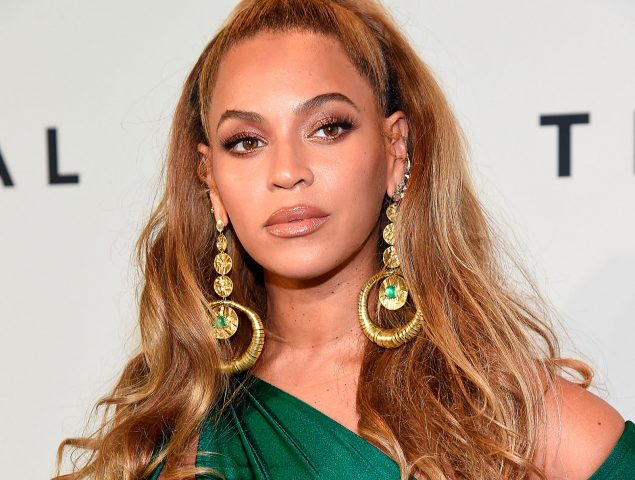
Resultado de imagen para BEYONCE

Beyoncé Giselle Knowles-Carter, known as Beyoncé, is a singer, rapper, dancer,
actress, model, fashion designer and American businesswoman.


  • Date of birth: September 4, 1981 (age 36 years).

  • Children: Blue Ivy Carter (n. 2012)

Sir Carter (n. 2017)
Rumi Carter (n. 2017)
Spouse: Jay-Z (m. 2008)

  • Genders: R&B, soul, hip hop

  • Distinctions: Premio Grammy por Mejor canción R&B, Premio Grammy a la mejor

colaboración de rap/cantada (2004) y a la mejor interpretación de R&B (2015)
MTV Movie Award for Best Fight (2010)

Beyoncé performed in various singing and dancing competitions as a child. She rose
to fame in the late 1990s as lead singer of the R&B girl-group Destiny's Child.
Managed by her father, Mathew Knowles, the group became one of the world's best-
selling girl groups in history. Their hiatus saw Beyoncé's theatrical film debut in Austin Powers in Goldmember (2002) and the release of her debut lbum, Dangerously in Love (2003). The album established her as a solo artist worldwide, debuting at number one on the US Billboard 200 chart and earning five Grammy Awards, and featured the Billboard Hot 100 number one singles "Crazy in Love" and "Baby Boy”.

Following the break-up of Destiny's Child in 2006, she released her second solo album, B'Day (2006), which contained her fourth number one single, "Irreplaceable" as well as the top ten singles "Déjà Vu", and "Beautiful Liar". Beyoncé also continued her acting career, with starring roles in The Pink Panther (2006), Dreamgirls (2006),
and Obsessed (2009)

A self-styled "contemporary feminist," Beyoncé's songs are often characterized by
themes of love, relationships and monogamy, as well as sexuality and female empowerment. On stage, her dynamic and highly choreographed performances have led critics to acclaim her as one of the best artists of contemporary popular music. Throughout a career spanning 20 years, he has won 22 Grammy awards and sold nearly 200 million solo recordings. 

We chose a song that from the point of view of the singer highlights the feminine role within society.


Run The World (Girls)


Girls, we run this mother (x4)
Girls!

Who run the world? girls! (x4)
Who run this mother? girls! (x4)
Who run the world? girls! (x4)

Some of them men think they freak this like we do
But no they don't
Make your cheques, come at they neck,
Disrespect us, no they won't


Boy don't even try to take us
Boy this beat is crazy
This is how they made me
Used to take this, baby
This goes out to all my girls
That's in the club rocking the latest
Who will buy it for themselves and get more money later?

I think I need a barber
None of these bitch*s can fade me
Im so good with this,
I remind you I'm so hood with this

Boy im just playing, come here baby
Hope you still like me, If you hate me
My persuasion can build a nation
In this our, our love we can devour the world
You'll do anything for me

Who run the world? girls! (x4)
Who run this mother? girls! (x4)
Who run the world? girls! (x4)

It's hot up in here
DJ don't be scared to run this, run this back
I'm repping for the girls who taking over the world
Have me raise a glass for the college grads

Anyone rolling I'll let you know what time it is
You can't hold me
I broke my 9 to 5 and copped my cheque
This goes out to all the women getting it in,
Get on your grind
To the other men that respect what I do
Please accept my shine

Boy you know you love it
How we're smart enough to make these millions
Strong enough to bear the children
Then get back to business
See, you better not play me
Don't come here baby
Hope you still like me
If you hate me

My persuasion can build a nation
In this hour
Our love we can devour
You'll do anything for me

Who run the world? girls! (x4)
Who run this mother? girls! (x4)
Who run the world? girls! (x4)

Who are we?
What we brought?
The world
Who are we?
What we brought?
The world
Who are we?
What do we brought?
We brought the world
Who are we?
What we brought?
We brought the world
Who run the world?

GIRLS!

https://www.youtube.com/watch?v=VBmMU_iwe6U


STUDENTS: Bentancor Gimena, Ferreyra Romina.